
Home > Health > Veins
Brown spots around your ankles? A nurse explains: it's not what you think.
It is not a skin problem, but a problem with your veins that becomes visible on your skin. That is why creams, compression stockings, and tablets did not help.

By Claudia Bennett
August 3, 2026 • 3 minute read

I will probably antagonize quite a few primary care doctors, many vascular clinics, and perhaps even the entire U.S. vein-care industry for remedies for vascular and circulation complaints—worth billions of dollars—with this.
But honestly, I don't care anymore.
What I am about to tell you could put an end to the comfortable system from which they all benefit.
The ten-minute appointments.
Just wear your compression stockings, sweetheart.
Laser treatments costing $4,300 at private clinics, while your legs are sometimes in even worse condition twelve months later.
I have seen this in thousands of women. But one woman eventually brought me to the point where I could go no further.
Her name is Margaret.
On a Tuesday morning in March, she entered my consulting room. She was 68 years old, sat down opposite me, and said softly:
I haven't worn a skirt since 2019. I don't recognize my own legs anymore.
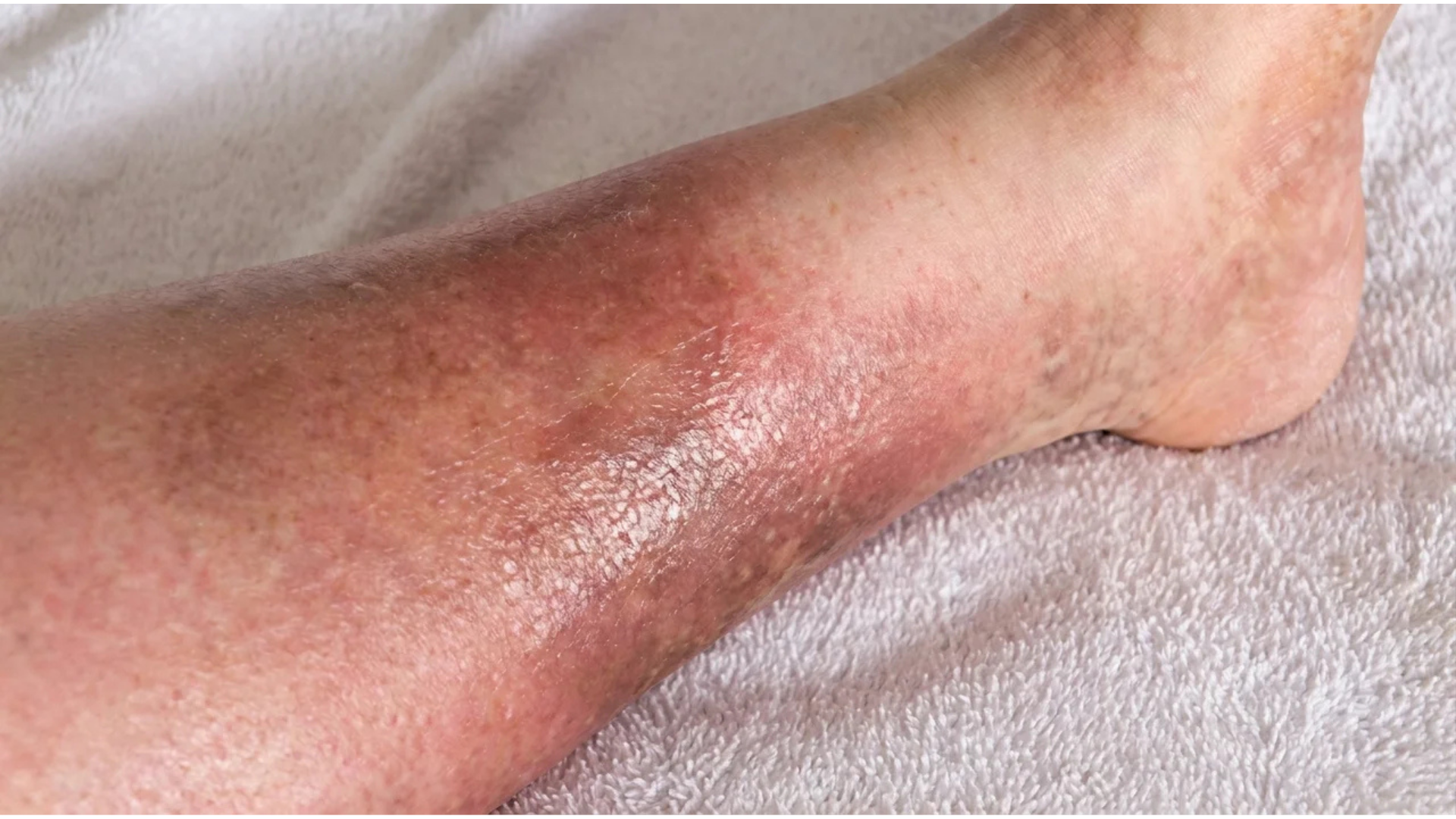
Her ankles were the color of weak tea. Brown, blotchy, and warm to the touch.
The skin was so tight and gleamed so intensely that it looked as if it could burst open at any moment. She had already been to her doctor four times.
Each time she was given ten minutes.
Twice she was told that it was probably eczema.
She was prescribed hormone ointment and advised to lose about seven kilos.
Finally they said to her:
This is just part of getting older.
The word iron had never been mentioned.
For what Margaret still did not know after nine years of doctor visits, two pairs of compression stockings, four tubes of horse chestnut gel from pharmacy, and a private vascular examination in Boston, Massachusetts costing $340, was this:
The brown discoloration around her ankles was not eczema.
And it wasn't simply old age either.
It was not a fungal infection.
It was an accumulation of iron-containing pigment from her own blood. Due to damaged veins, blood fluid slowly leaked into the surrounding tissue. As a result, her skin gradually discolored from the inside out.
And virtually everything she had been advised up to that point, from creams and compression stockings to diuretics and new appointments, did not address the real cause.
I sat there with Margaret's file in front of me and felt something break inside me.
I knew that the system had let her down.
That is why I decided to look for something myself that focused on what was happening under her skin, instead of just on what you saw on the outside.
What I discovered eighteen months later will make quite a few people pretty angry.
Are you reading this because you notice reddish-brown spots slowly spreading up from your ankles?
Do your shoes suddenly no longer fit around three in the afternoon, while you pretend nothing is wrong?
Have you quietly put all your dresses and sandals to the back of the closet, and do you only wear long pants even in July?
Then please give me the next five minutes.
They could be the most important five minutes you spend on yourself this year.
My name is Charlotte Davies.
I worked as a specialist vascular nurse for 23 years, the last nine of which were at a regional vascular clinic in Massachusetts.
I have examined more than four thousand women with chronic venous insufficiency.
And four thousand times I saw the same hopeless circle: a ten-minute appointment, ten minutes in which complaints were dismissed, and then ten years in which the problem grew worse and worse.
I stopped in 2024 because I could no longer keep telling women the same story.
This is the story of what I discovered instead.
But first, I want to tell you about the night I finally reached my limit.
The night that changed everything.
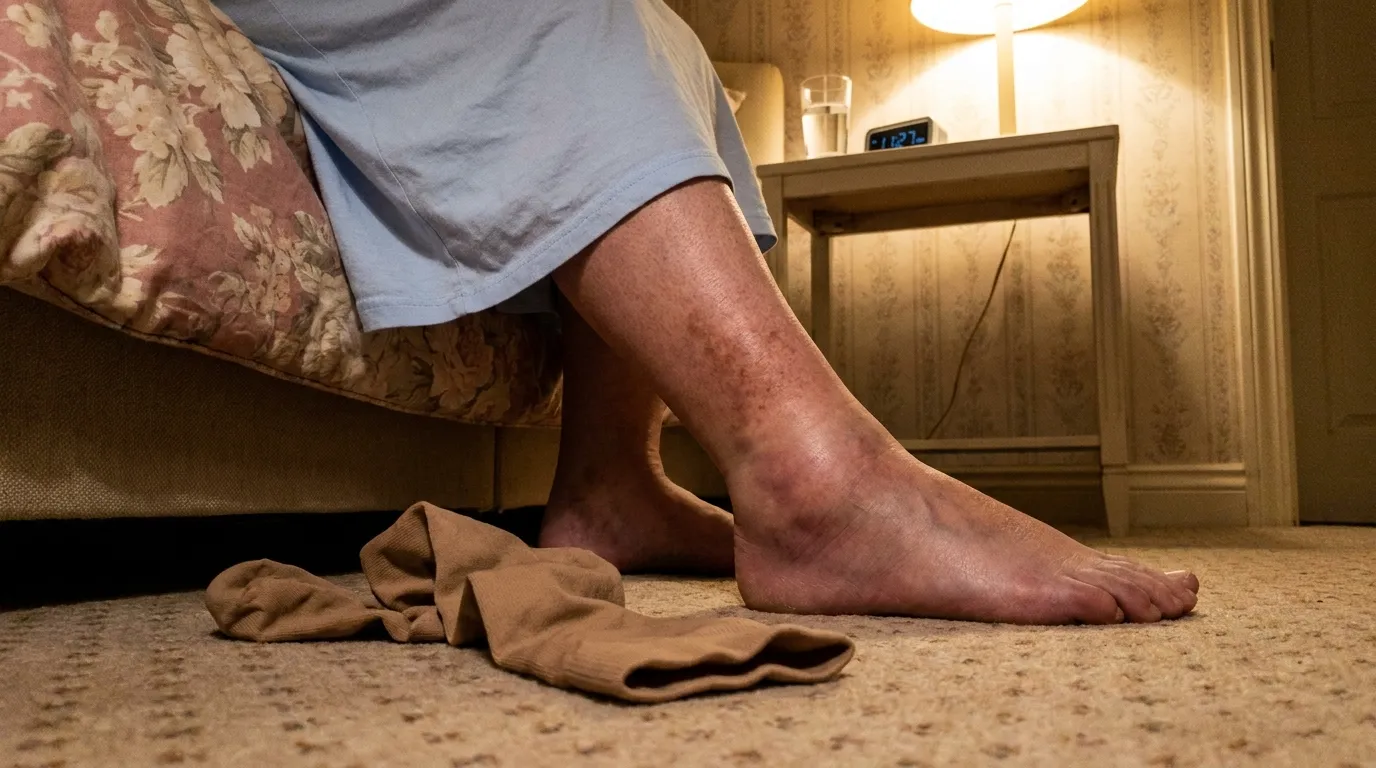
It was a rainy Thursday evening in November. At half past eleven, I was sitting at my kitchen table going through Margaret's papers for her check-up appointment the following morning when I suddenly stopped.
For Margaret had truly tried everything.
For seven years, she wore prescribed Class 2 compression stockings.
She hated them. She once told me that she had to cry every morning when she put them on.
She called them “the corset”.
For eighteen months, she took water pills.
As a result, she sometimes had to go to the toilet as many as nineteen times a day, but nothing changed around her ankles.
She had bought four different “miracle gels” for her legs online.
One of them was a strongly cooling menthol cream. It caused such an intense burning sensation on the already sensitive skin around her ankles that she had to rinse the cream off at the sink at half past ten in the morning, crying.
She had also been to a private vascular clinic. The duplex ultrasound alone cost $340.
There they told her that she could have foam sclerotherapy performed: $840 per treatment, three treatments in total.
But we cannot guarantee that it won't come back.
Margaret didn't just happen to have $2,535 lying around. She went home empty-handed.
That evening, I added everything up.
Within four years, she had spent over $3,380.
To treatments and products that had changed nothing.
And she still didn't dare wear a skirt.
I remained seated at the table and stared at the kitchen wall.
Then I realized something that I had actually never wanted to admit to myself in 23 years of working in healthcare.
Virtually everything we prescribed focused on the wrong problem.
What I discovered next changed everything.

For the next four months, I hardly slept.
I read every study I could get my hands on.
I called colleagues from Massachusetts General Hospital, Mass General Brigham, and Harvard Medical School.
I worked my way through English-language scientific literature until deep into the night. I spent $8,000 of my own money on research, formulas, and samples.
My husband thought I had lost my mind.
And what I discovered made me so furious that I would have loved nothing more than to smash a hole in the kitchen window.
The entire Canadian industry surrounding vein problems is based on a persistent misconception.

It is a lie worth $13.8 billion.
And that ensures you keep spending money, time after time.
This is what they would rather not tell you:
The reddish-brown discoloration around your ankles is not a skin disease.
It is not an inflammation. And it is not eczema either.
It is iron from your own blood that leaks out of damaged, small blood vessels, is broken down in the surrounding tissue, and subsequently accumulates in your skin as a permanent discoloration called hemosiderin.
In current dermatological guidelines, this is referred to as a clear sign of chronic venous insufficiency.
It is also mentioned in passing in information from health insurers and health authorities.
Many specialists in other countries speak openly about it.
Yet, not a single product on the shelves of pharmacies has ever explained this term to you.
Why?
Because, as soon as you know what it really is, they can no longer simply sell you compression stockings and skin creams as if they solve the underlying problem.
Those agents do not reach the place where the iron leaks from the damaged vessels.
They have never been able to do that either.
The real cause of the brown discoloration around your ankles
Let me paint the picture for you.
Imagine that the veins in your legs resemble an old garden hose. For decades, everything works flawlessly: the blood flows down and is then pumped back up again.
But after thirty, forty, or fifty years of stress from gravity, pressure, and wear, small leaks can develop. In the beginning, they are so small that you don't notice them. Yet they are already there.
Initially, fluid leaks primarily into the surrounding tissue.
This is phase one: fluid retention.
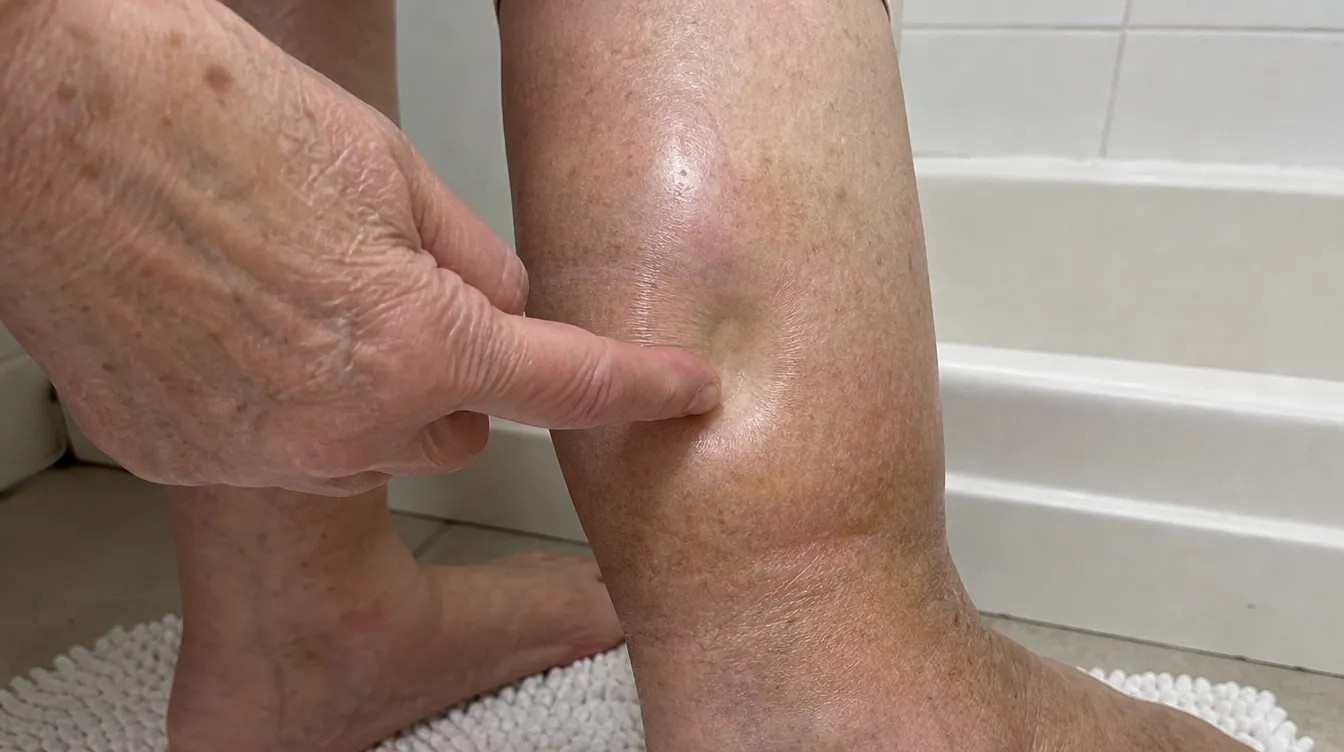
Towards evening, your ankles get thicker.
Your shoes are starting to pinch. When you press your finger on your shin, a dimple remains for a few seconds.
You were probably told that it was “just fluid retention” and that you needed to elevate your legs more often.
But the underlying problem often lies with the veins and not with your kidneys.
When the vessel wall weakens further, red blood cells can also leak through the minor damage into the surrounding tissue.
There they are broken down, releasing iron.
That iron, the same mineral found in dietary supplements, can subsequently accumulate in the skin as hemosiderin. This causes rust-brown discolorations that you cannot simply wash away.
This is phase two: heat and irritation.
The skin may become warm, itchy, burning, and brown.
Margaret was at this stage. And if you are reading this because you recognize the same symptoms, chances are you are dealing with this too.
If nothing changes, the tissue can eventually become harder and stiffer.
The skin and the underlying fatty tissue can feel increasingly firm, almost like damp wood.
A hard, fibrous rim then forms around the ankle.
This is phase three: hardening.
The medical term for this is lipodermatosclerosis, an advanced stage in which changes become increasingly difficult to reverse.
That is why it can only feel so tight and hard. It is the moment when the “garden hose” increasingly loses its flexibility.
Leading vascular researchers have been publishing for decades on disrupted microcirculation and the accumulation of iron-containing pigment in the skin.
The science behind this is therefore not new.
The medical knowledge has been available for a long time.
But this is the uncomfortable truth: there is often less money to be made from a simple solution.
You cannot patent horse chestnut. And you cannot make health insurers pay $840 per treatment for a roll-on that you apply yourself at home.
You also cannot keep selling endless ten-minute appointments to women who no longer need them.
That is why many women remain stuck in the same cycle:
Doctor, compression stockings, cream, back to the doctor, further examination, private clinic, laser treatment, recurring symptoms, and then it all starts all over again.
It is actually a smart system.
At least, when you do not see a 68-year-old woman who hasn't dared to wear a skirt for six years as a human being, but as a source of income.
The breakthrough almost no one is talking about
In the eleven weeks that followed, we tried it at Margaret's.
In the third week, she called me. This time she wasn't crying out of frustration.
She cried because that morning she had put on ankle-length pants again for the first time since the summer of 2018. Her granddaughter had said to her:
Grandma, your legs look better.
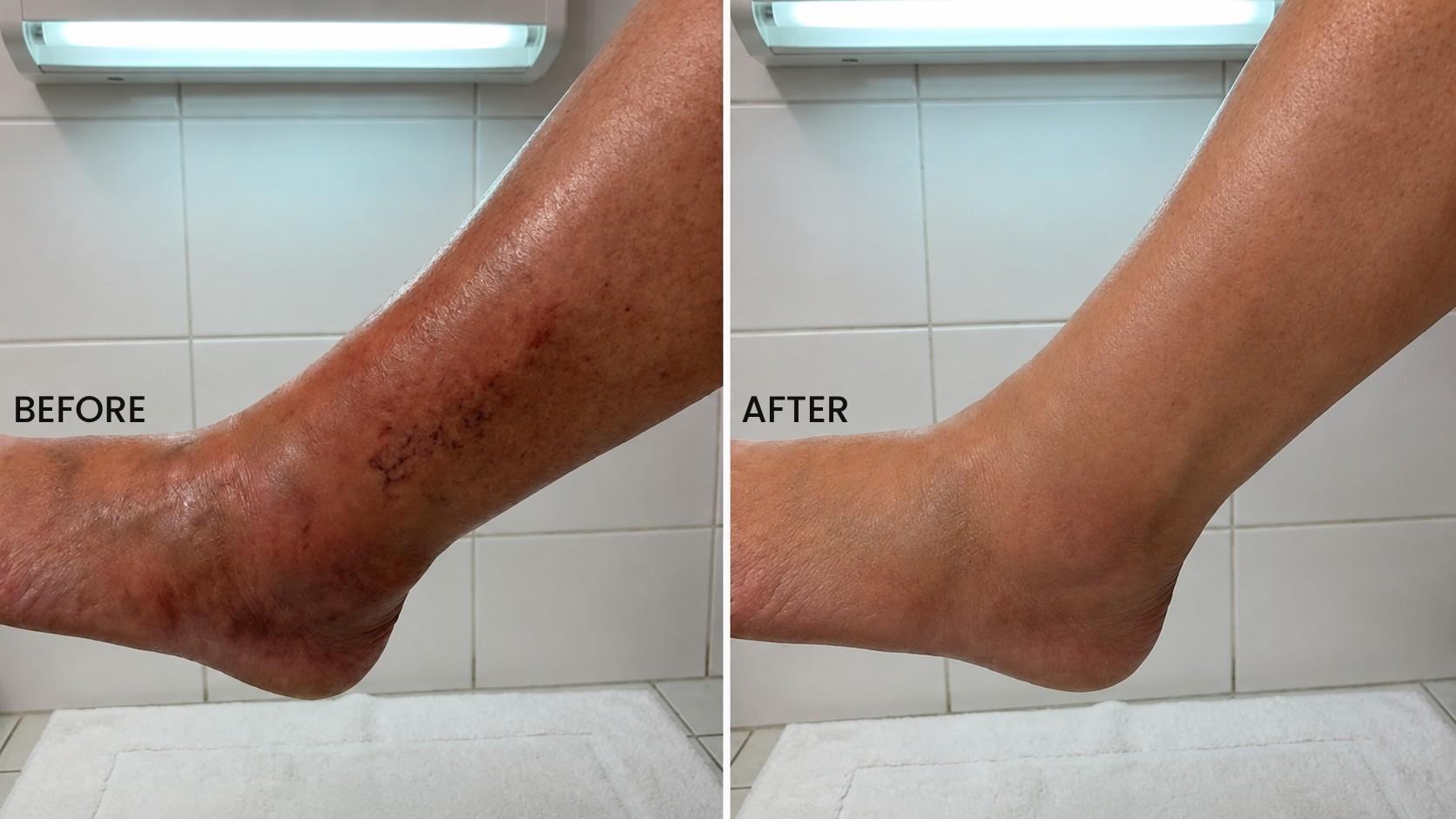
In the eighth week, the brown discoloration around her right ankle had clearly become lighter.
Not completely gone, but the edges were softer, the color was less noticeable, and her skin felt less warm.
We used a roll-on for external use, formulated with three specific plant-based ingredients in carefully balanced proportions.
The goal was to provide local support to the skin and underlying tissue around the small blood vessels. Therefore, not via the kidneys, not through external pressure as with compression stockings, and not merely with a temporary cooling effect like with a gel.
Because the formula was applied locally to the problem area, we wanted to address three things at once.
To really tackle this problem, you need to do three things at once:
1
Support the firmness of weakened vein walls
The minor leaks must not increase further. An important plant-based component for this is aescin, a standardized extract from horse chestnut seed. Without that support, it is like continuing to mop up water while the tap is still running.
2
Help remove accumulated fluid and waste products from the tissue
Centella asiatica, also known as gotu kola, is used to support the connective tissue around the small blood vessels.
The full triterpene fraction, also known as TTFCA, additionally helps support natural fluid drainage via the lymphatic system. This allows the body to better remove substances that have accumulated in the tissue.
Without this step, moisture and iron-containing breakdown products can remain in the tissue.
3
Soothe burning, itchy, and tight skin without putting extra strain on it.
It is precisely at this point that many strongly cooling creams go wrong.
Many products contain between three and ten percent menthol. On skin that is already sensitive or damaged, such a high concentration can feel irritating rather than cooling.
Therefore, a carefully dosed amount of menthol is important. In this case, carefully means: significantly less than one percent.
Without the correct dosage, even a so-called “soothing” product can make the skin redder, more sensitive, and more vulnerable.
If one of these three components is missing, you are not fully addressing the problem.
Therefore, compression stockings alone are often not enough.
They exert pressure from the outside, but do not directly support the weakened vessel walls.
The same applies to water pills. They cause your body to excrete more fluid, while the underlying problem is located in your legs and not in your kidneys.
Therefore, many horse chestnut creams from pharmacies, or online stores did not produce the desired result. They often contain only one of the three important ingredients, sometimes in combination with too much menthol, while Centella asiatica is completely absent.
You need all three ingredients.
Simultaneously and in carefully attuned proportions.
A formula with a threefold action that addresses multiple aspects of the problem.
And that was exactly what I was looking for.
This discovery is causing considerable unrest within the established industry.
I was summarizing my notes when Susan came into my life.
Susan is 61 years old. She was a district midwife in Boston, Massachusetts and had just retired.
For thirty-eight years, she assisted with deliveries in hospitals. By now, her knees and ankles felt like those of a footballer after a tough season.
Even during her three pregnancies, she wore compression stockings.
When she retired, her right ankle was the color of a tea bag steeped for far too long. The skin around her shin felt, as she described it herself, “woody.”
In May, she came to see me crying.
Not because of the pain.
Her son was going to get married in the United States in September, and she had already told her daughter-in-law that she would not be wearing the dress.
I had her try one of the formulas I was researching at the time.
Eleven days later, she sent me a message. I have kept it to this day.
It said:
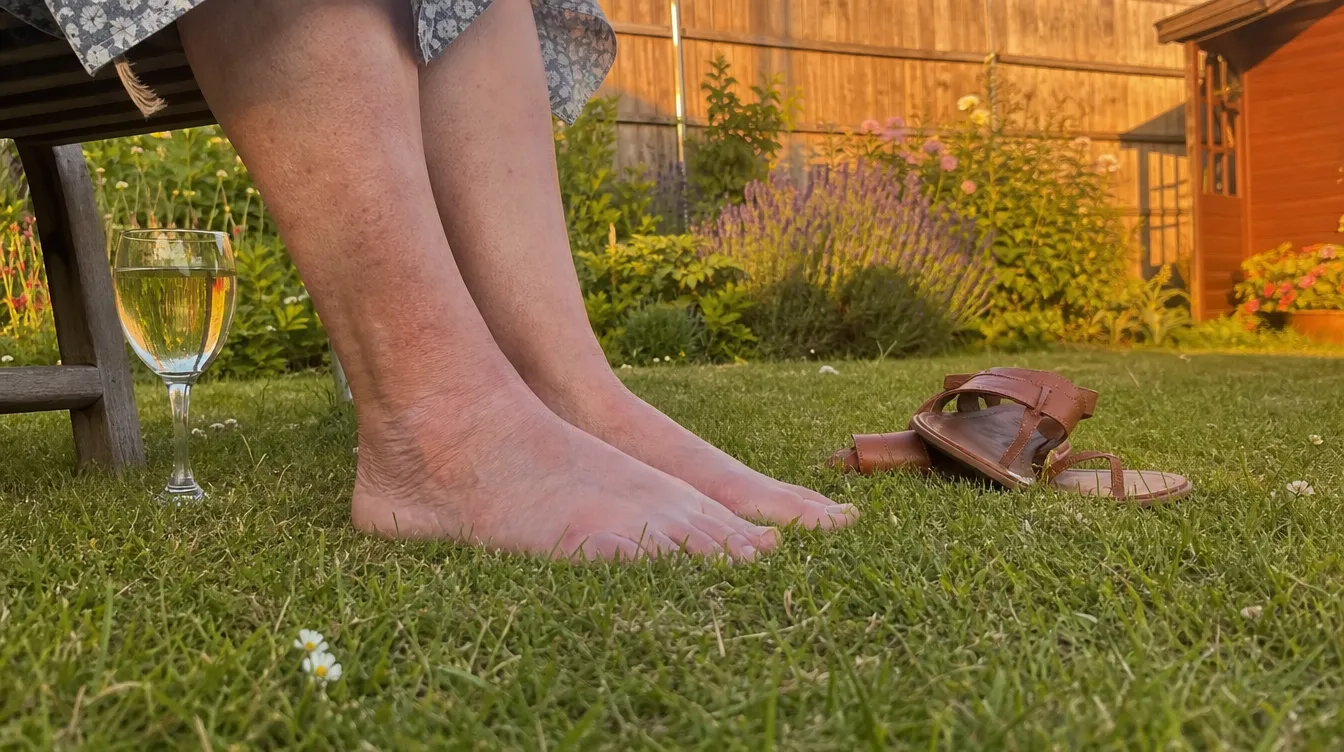
Claudia, last night I was sitting barefoot on the grass in the garden. The burning sensation is gone. I don't know what's in this little bottle, but you won't get it back.
She wore the dress in September.
There are photos of it.
Opposition from a totally unexpected quarter
When it became known within the regional clinic that I was telling women about an externally applied solution that was not covered by basic insurance, the reaction was telling.
An experienced medical specialist told me over a cup of coffee, which was actually never just about coffee, that I was venturing “into dangerous territory”.
A representative of a pharmaceutical company whom I had known for years suddenly stopped answering when I called.
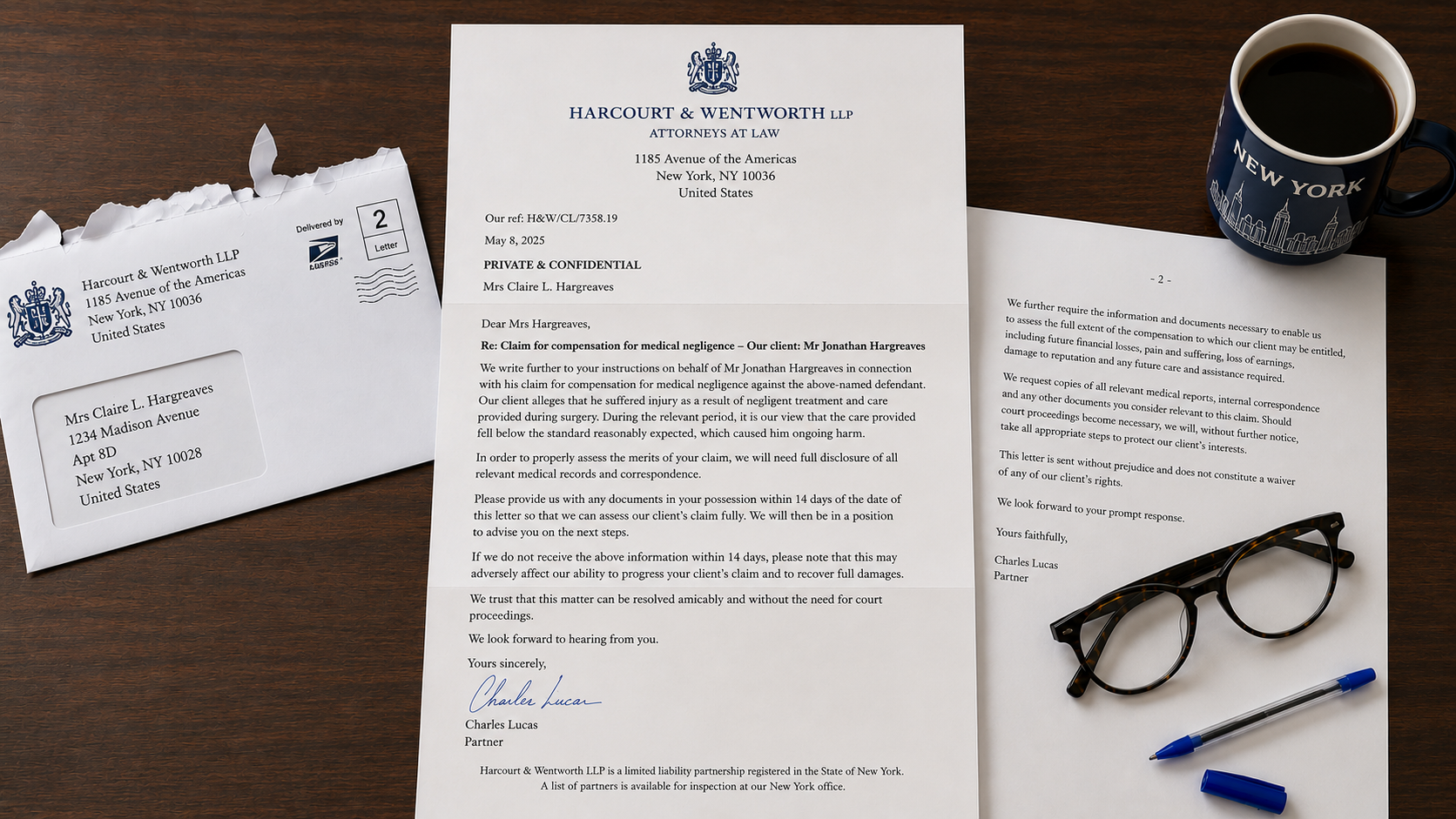
I also received a politely worded letter from a private vascular clinic, drafted by a law firm. In it, I was advised to “moderate” my recommendations.
They wanted me to keep my mouth shut, because I had found something that could shake their entire business model.
A simple roll-on for external use that:
✅ Focused on the underlying cause, instead of just hiding the symptoms.
✅ Could make a difference within a few days, instead of only after months of appointments.
✅ Cost less than one private duplex survey.
✅ Gave women the opportunity to care for their legs simply at home, in their own bathroom.
But what those vultures from the vascular clinics hadn't counted on was that I had already found the developers.
A small laboratory in southern Massachusetts, where three biochemists and a Belgian phytochemist had been working in silence on exactly this problem for almost six years.
In July, we sat opposite each other at a table.
I asked every critical and uncomfortable question I could think of.
And they had a convincing answer to every question.
The brand that I recommend to every patient nowadays
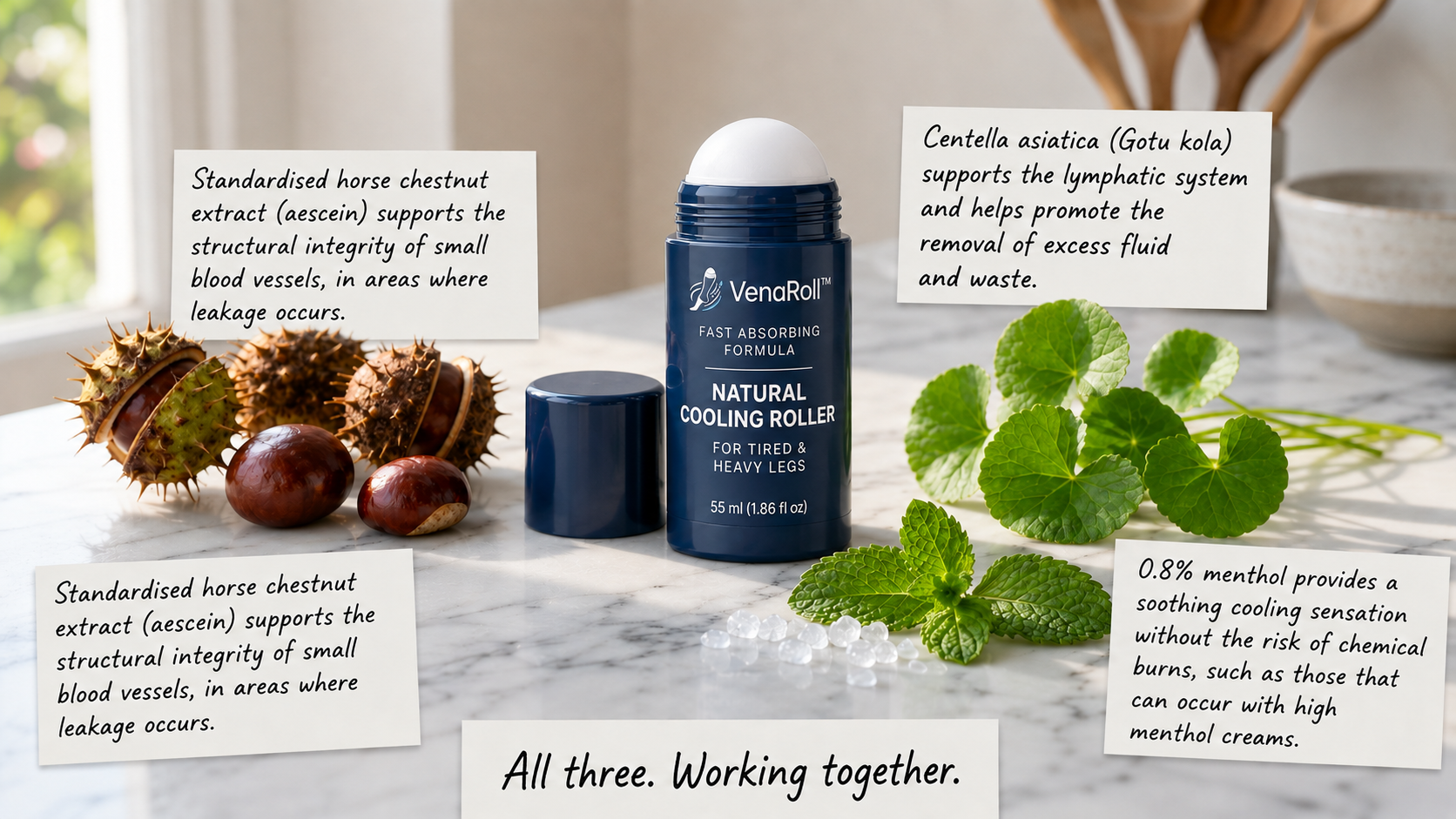
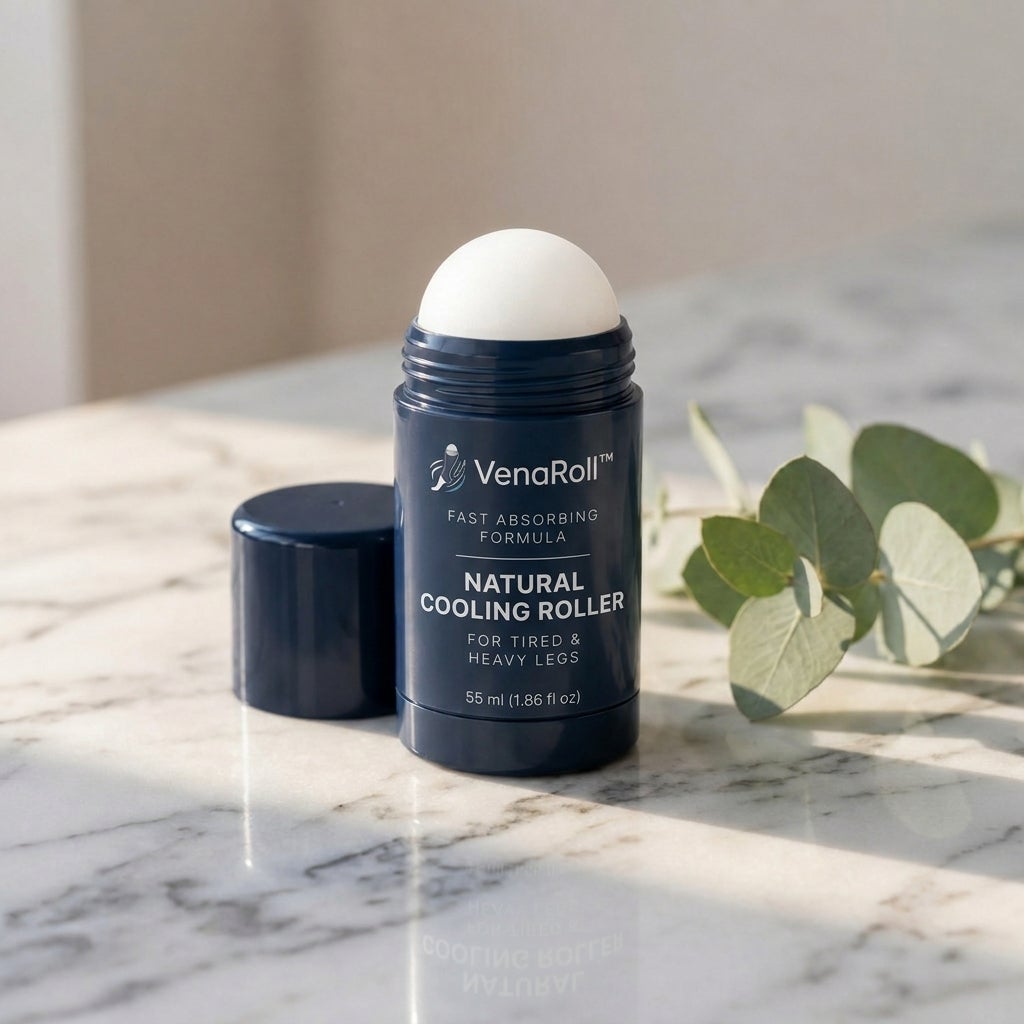
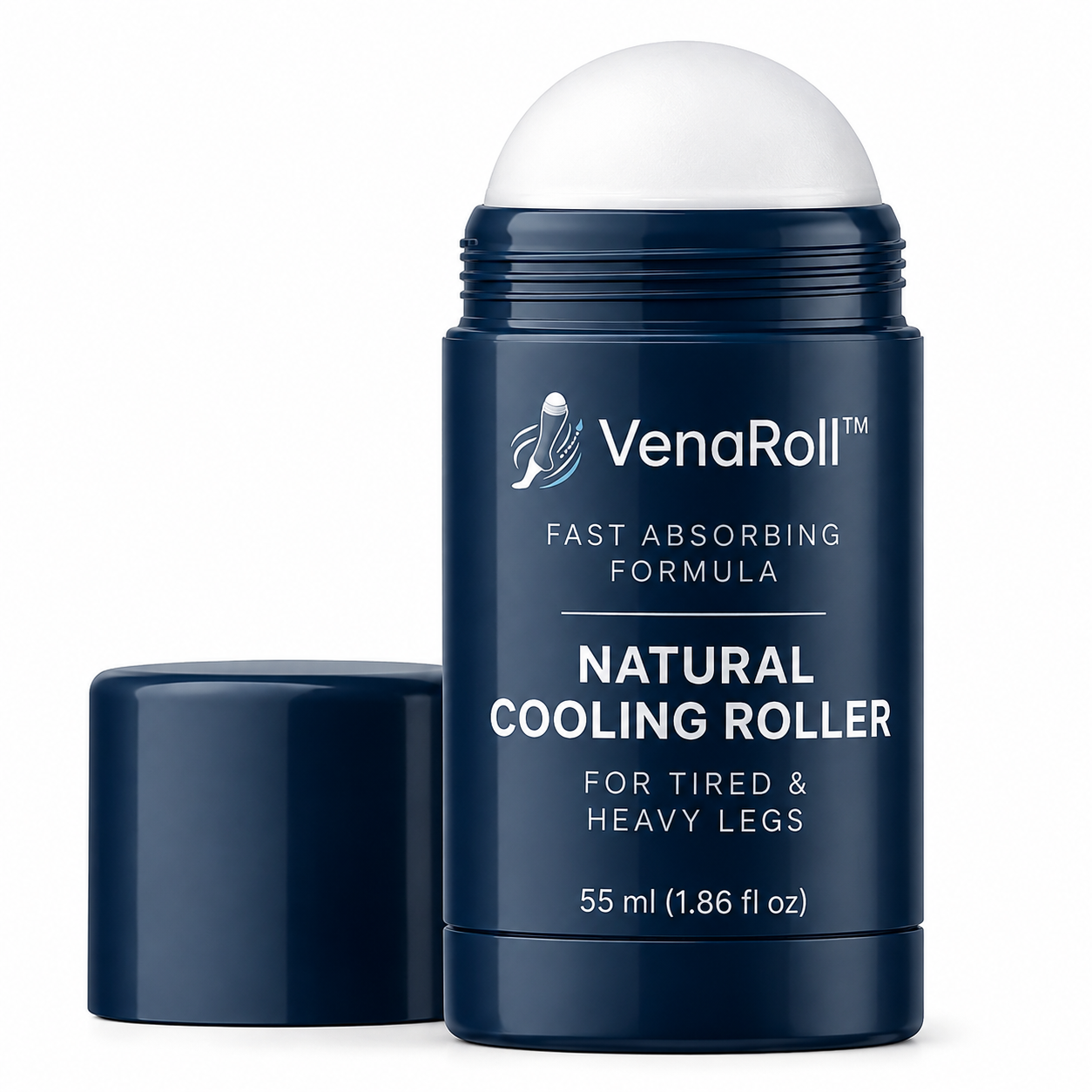
It is called VenaRoll™.
I didn't develop it myself. The team in Boston, Massachusetts did. They have been working on it since 2019.
I actually discovered it by chance, through a former colleague who had been discreetly recommending it to her private patients for over a year.
When I had Susan try the formula, first, and then six other women in my own practice, I knew it.
VenaRoll™ is in fact the only roll-on for external use that I have found on the market that meets all three of the aforementioned conditions, with a single application of just sixty seconds.

Standardized horse chestnut extract (aescin)
Supports the strength of the small vein walls at the sites where leaks occur.

Centella asiatica (gotu kola, TTFCA)
Supports the surrounding connective tissue and helps drain accumulated fluid and waste products from the tissue.

Precisely dosed 0.8% menthol
Cools burning and itchy skin without the risk of additional irritation from highly concentrated menthol creams, which may have already further burdened your sensitive skin.
All three. Working together in one roll-on.
Apply once a day. Just sixty seconds.
Roll up from your ankle to just below your knee, in the direction the blood flows back. Then simply continue with your morning routine.
No appointment with the doctor. No long waiting list.
No prior authorization from your health insurer.
No waiting room at a vascular clinic with magazines from 2019.
Just you and your legs, finally getting the support they've been asking for all this time.
Relief. Support. Skin that looks like your own skin again.
What I discovered about this company before I dared to recommend it
Listen, I never attach my name to health products. Never.
I have been approached about this many times. Over the past six years, I have turned down every request.
Before referring even a single one of you to this brand, I therefore wanted to know exactly who I was entrusting you to.
In August, I traveled to Boston, Massachusetts.
I asked every critical and uncomfortable question I could think of.
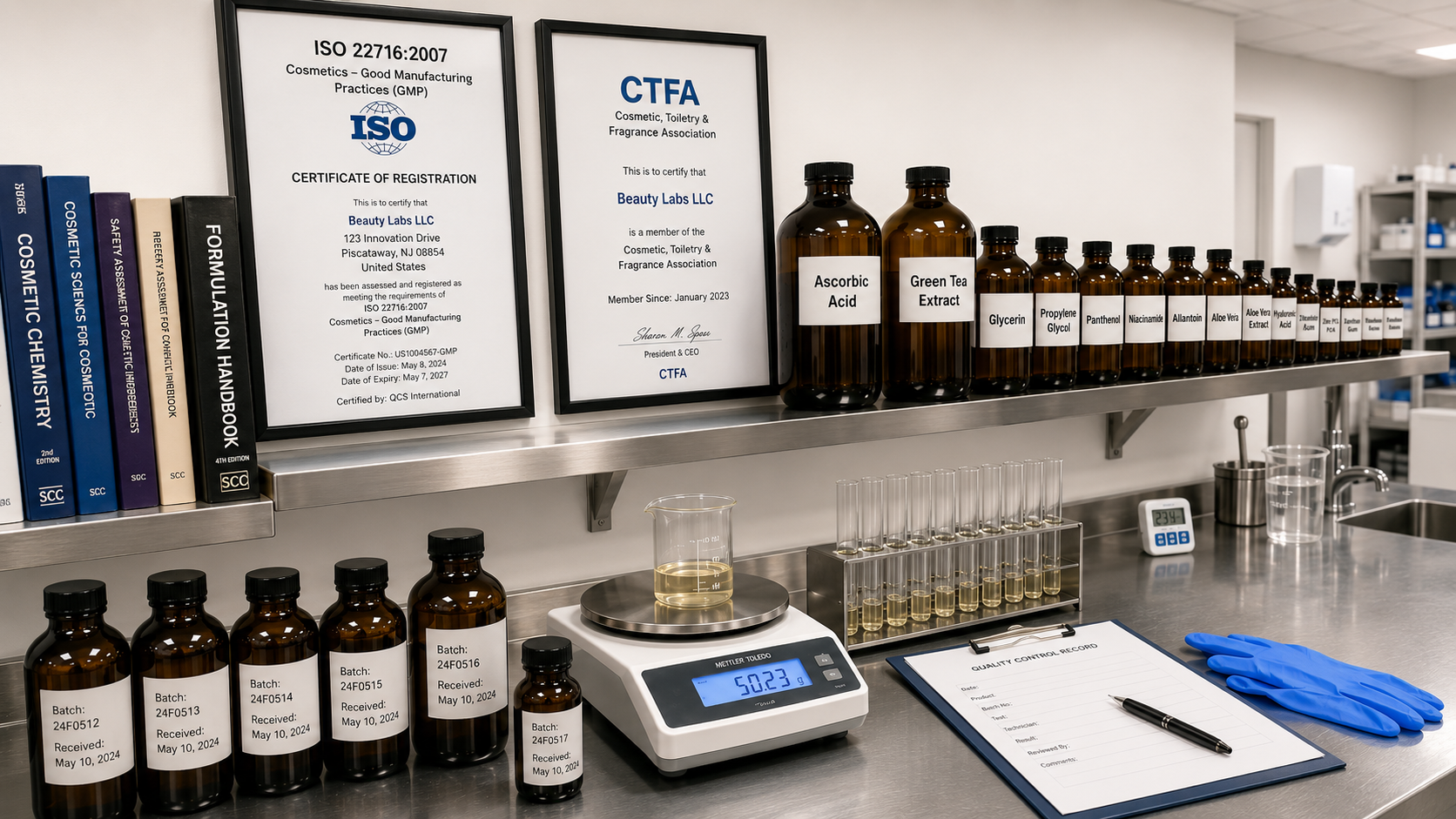
I wanted to see the certificates from the laboratory.
I wanted to have the developer's resume in front of me.
And I wanted to know why less than 0.1% of their customers asked for a refund, whereas that percentage is around fifteen percent for many leg care products on Amazon.
This is what I discovered:

The laboratory is registered with the competent supervisory authority and is ISO 22716 certified for the production of cosmetics. This is the same quality standard used by major pharmacy brands.

The lead developer is Dr. Mark Davies, a Canadian phytochemist with nineteen years of experience within the research department of a company whose parent concern will be familiar to many readers.

The horse chestnut comes from a single regular supplier in Massachusetts, who also supplies pharmacies. Therefore, no use is made of cheap raw materials from the mass trade.
The customer service is based in Boston, Massachusetts and usually answers the phone within two rings. I have tested this myself three times.
They produce in small batches. From raw material to finished bottle, it takes about six weeks. No fillers, no parabens, no MSM, no alcohol, and no perfume.
In 23 years, I have seen how this industry tries to save wherever possible.
This team doesn't do that.
That is why I am willing to attach my name to VenaRoll™.
This is how VenaRoll™ supports your legs during the first 7 days.
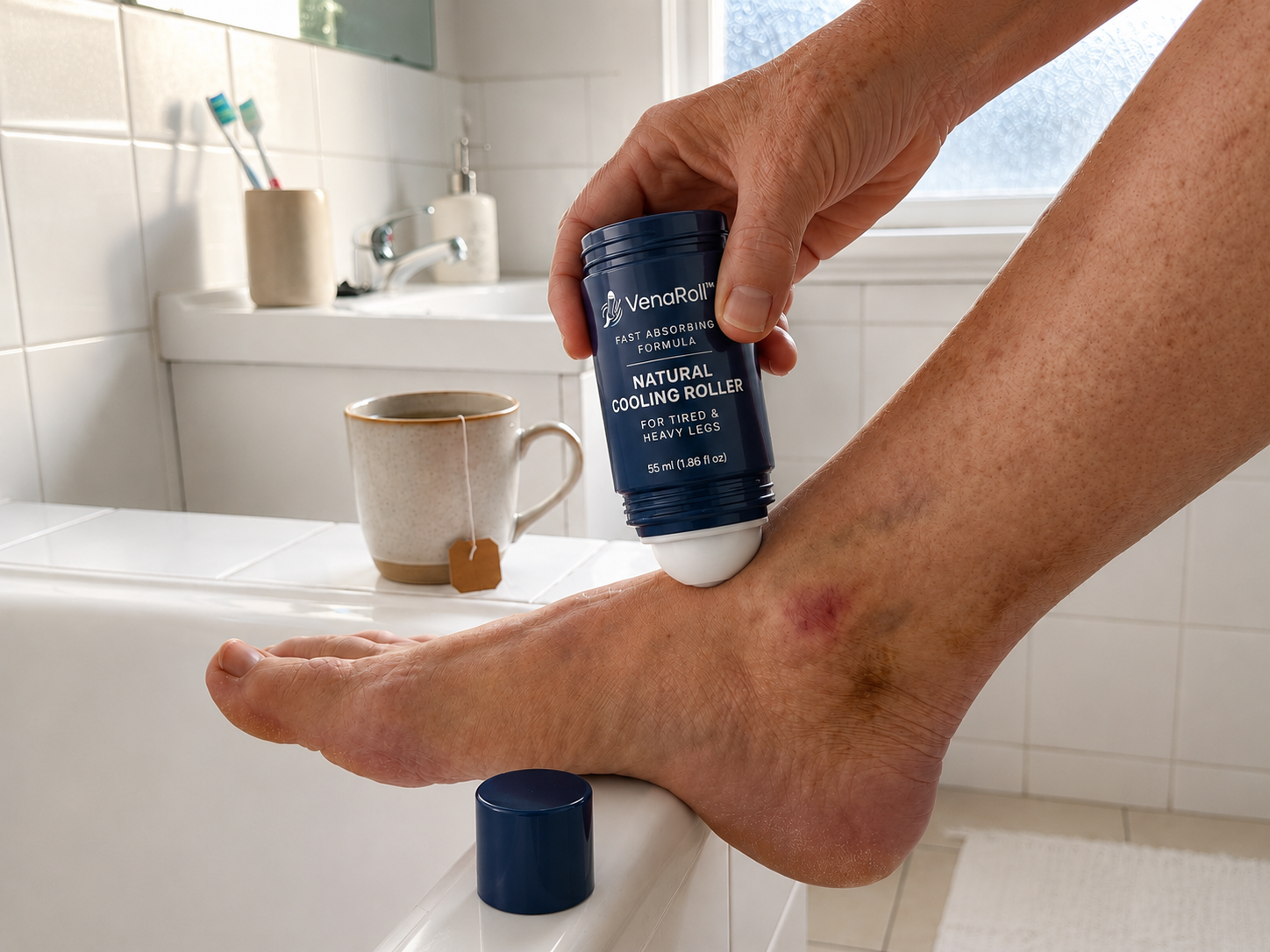
When you apply VenaRoll™ around your ankle in the morning, according to the formula, the following happens under your skin:
Minute 0 to 10: the cooling phase
The precisely dosed 0.8% menthol activates the cold-sensitive TRPM8 receptors in the skin.
These are the same receptors that also respond to cold water. At a concentration of 0.8%, the risk of chemical irritation remains limited.
The burning sensation subsides. That deep, persistent itch also calms down.
Most women notice this within three to five minutes.
You are not imagining it. This has to do with real neurological signaling processes.
Days 1 to 3: the calming phase
Aescin begins to reach the walls of the small blood vessels.
Naturally, the minor leaks will not repair overnight. That would be impossible. However, further deterioration can be slowed down.
By evening, the swelling may be less severe.
The dimple that remains when you press your finger on your skin disappears faster.
Maybe you can wear the same shoes all day again, without having to swap them for slippers at four in the afternoon.
Days 4 to 7: the recovery phase
Centella asiatica is now beginning to support its full function.
Accumulated fluid and iron-containing breakdown products in the tissue slowly begin to move.
The brown discolorations will not disappear immediately. I want to make that very clear. But the redness around the brown spots, that warm and irritated edge, may decrease.
The skin is starting to look calmer.
Less red. Less sensitive.
And increasingly as if it were your own skin again.
After two weeks of consistent daily use, you wake up one morning, walk barefoot to the kettle, and your husband, daughter, or granddaughter looks at your legs.
Then someone suddenly says:
Your legs look better, right?
After 23 years of working in healthcare, that is the moment that truly counts for me.
Not what a measurement indicates.
Not what is visible on a duplex ultrasound.
But the moment when someone who has loved you for decades looks at you and notices the difference.
What 10,543 women have experienced in the past fourteen months
In the past fourteen months, more than 10,543 women in Canda have used VenaRoll™.
Before I attached my name to it, I asked the team to share all available customer data with me.
These were the results:
89% reported significantly less swelling at the end of the day within the first two weeks.
76% indicated that the burning and itching sensation had noticeably decreased by the third day.
After ten days, 81% used at least one other product less or not at all, such as compression stockings, gel, or a supplement.
But the figure that really convinced me was this:
Only 1% asked for a refund.
The founder told me on a serious face that there were even two women among them whose cat had knocked the bottle off the bathroom shelf.
But you don't have to just take my word for it.
Below you can read what women from all over Canda wrote about VenaRoll™ themselves.
This is what I discovered:
Monique S.
Verified purchase
I just wanted to say that I have tried four different horse chestnut creams from the pharmacy over the past two years. Not a single one worked. I don't know what is different about this one, but the burning sensation at night is gone. For the first time since the corona period, I am sleeping with my legs outside the covers again. Thank you very much.
Susan B.
Verified purchase
The doctors kept saying that I had to learn to live with it. Just learn to live with it. As if I had a choice. I started in March. At the end of April, I wore open shoes to a friend's funeral. It might sound strange to be happy about that, but it was the first decent pair of shoes I had worn outside the house in three summers. On the way home, I cried in the car.
Janet J.
Verified purchase
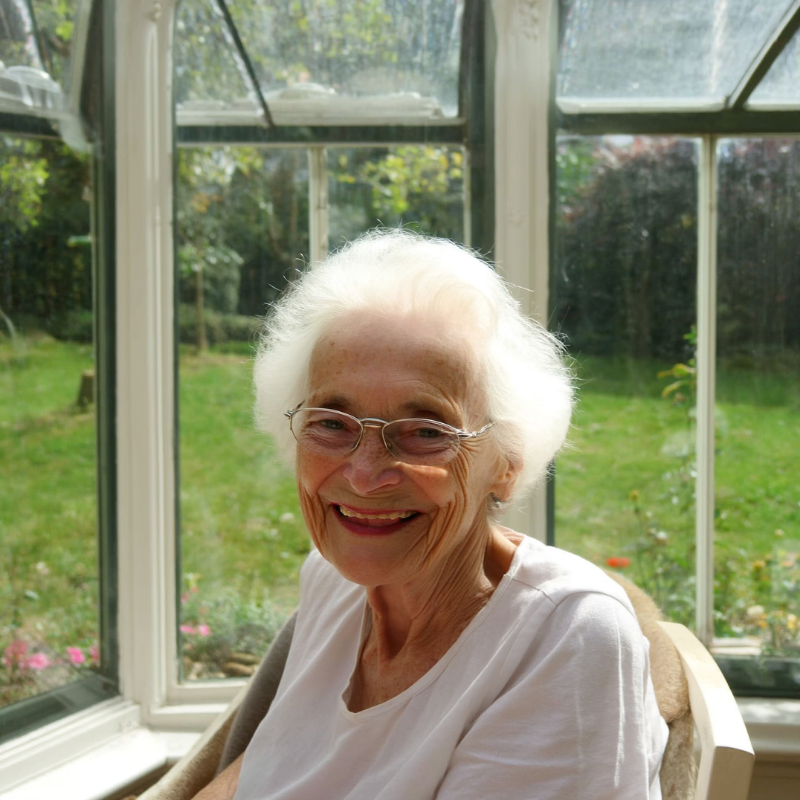
I was skeptical. For the past six years, I have bought almost every leg gel I could find online, but nothing helped. My daughter ordered this one for me after reading about it online. I used it for nine days before I noticed a difference. When I stepped out of the bath, I saw my ankle in the mirror and suddenly thought: “So this is what my ankle is supposed to look like.” I hadn't been able to say that in ten years.
What chronic vein problems really cost in Canda

Let me show you what the treatment of this problem in Canda can really cost you.
The route via regular care:
First appointment with the doctor: usually reimbursed, but often you only get ten minutes and the conversation ends with: “Just wear compression stockings.”
Compression stockings: $30–$70 per pair, replaced approximately every six months, for years on end.
Wearing compression stockings for five years: approximately $770, not including the daily struggle of putting them on every morning.
The end result: the brown discoloration can worsen after all, because compression stockings do not directly address the underlying cause.
The route via a private clinic:
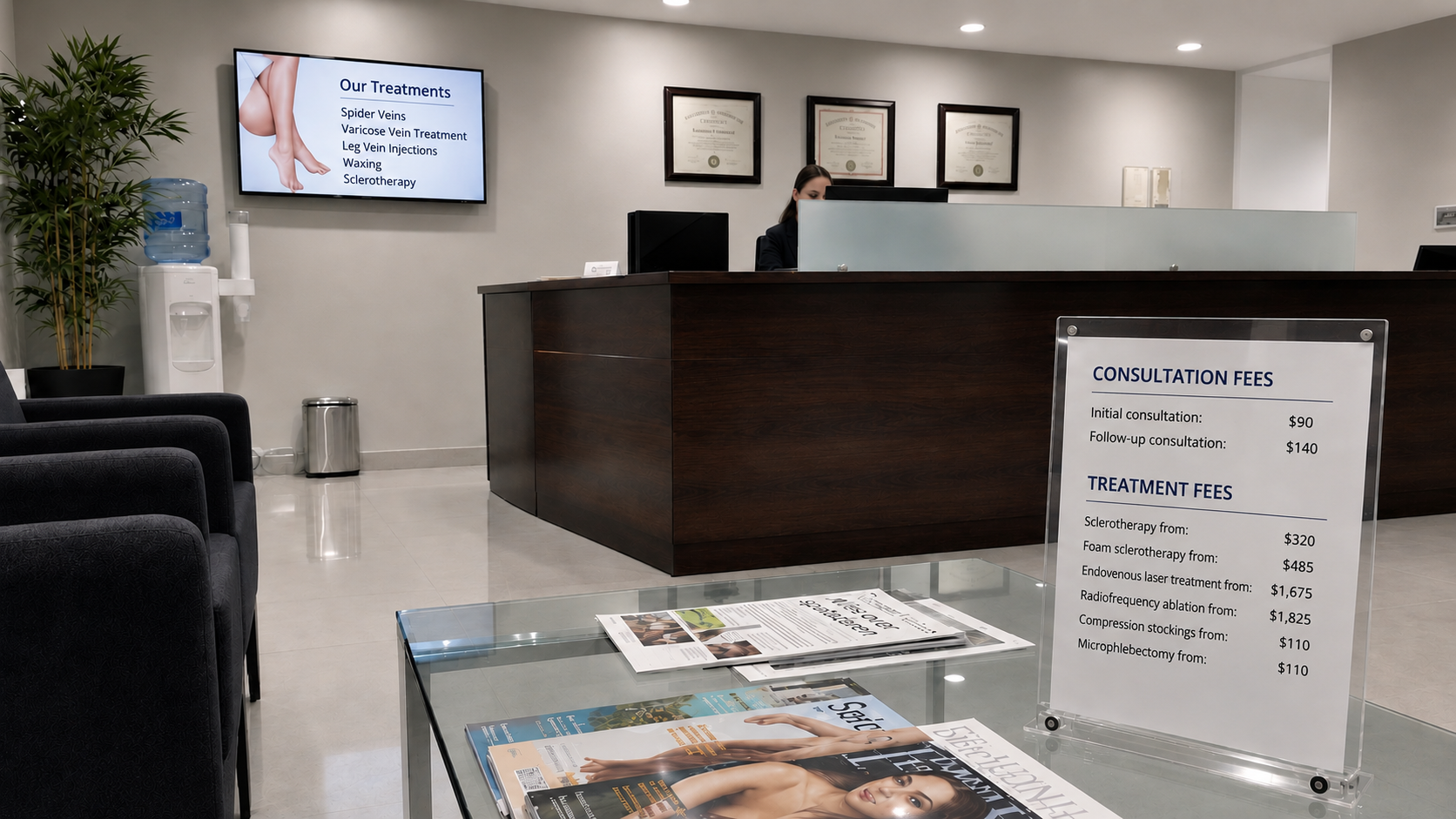
First private consultation: $340–$520.
Duplex ultrasound: $340–$645.
Foam sclerotherapy: $770–$1,310 per treatment, usually three to five treatments.
Endovenous laser treatment: $3,230–$4,755 per leg.
The chance that the symptoms will return within five years can be significant. However, this is not always clearly discussed before you pay.
Realistic total costs for both legs, including aftercare: $8,150–$11,200, without guarantee.
The route via supplements and gels:
Horse chestnut tablets: $34–$70 per month, for an indefinite period.
“Cooling” leg gels from the pharmacy: $23–$54 per tube, with one tube lasting about three weeks.
Prescription water pills: often reimbursed, but the side effects can significantly affect your daily life.
Trying different remedies for four years: a total of approximately $1,685–$2,760.
The end result: you often end up back at the doctor anyway, while the brown discolorations have increased further.
The clinics are benefiting from this. Do you know why?
Because every product that doesn't help takes you to the next, more expensive step.
Does the cream not work? Then you will get tablets.
Do the tablets not work? Then compression stockings follow.
If compression stockings don't help, then laser treatment comes into play.
And if that treatment is insufficient? Then treatment is repeated.
It is a business model that thrives on the slow deterioration of your own legs.
But this is what really makes them nervous.
The special prize I have arranged for my readers
VenaRoll™ should actually cost just as much as comparable topical products offered at private vascular clinics. And frankly, given the quality of the raw materials and the careful composition, the team behind the formula would have every right to charge the same prices as well-known pharmacy brands.
But I didn't get involved in this just to send my readers home with a so-called “fair selling price.”
That is why I sat down with the founder again.
I said very clearly:
My female readers are women like Margaret and Susan.
They have already spent thousands of dollars on compression stockings and creams that did hardly anything for them. If you want me to attach my name to your product, you must offer them a substantial discount.
He protested. I stood my ground.
We have been negotiating back and forth about this for almost two weeks.
Ultimately, he agreed to offer my female readers a prize that is not available anywhere else, but exclusively through this page and only for a strictly limited period.
Reportedly, his financial director was anything but happy about that.
That's good.
I will not mention the exact price here.
The brand explicitly asked me not to make the discounted price public on a page from which large retail chains can easily take a screenshot. As soon as CVS or Walgreens sees that price, they can demand the same wholesale terms, and the entire price structure falls apart.
You will see the actual price on the next page as soon as you click through.
But I can tell you this much already:
It is only a fraction of what you would pay for a single private consultation at a vascular clinic.
Less than what you spend on an elaborate dinner with the whole family.
For the only roll-on I have found that supports all three parts your legs really need.
The offer I arranged ends today at midnight.

When the founder agreed to this special discount for my female readers, he set only one condition: twenty-four hours.
Not a week. Not a weekend. Just one day.
He does not want this price to remain online longer than necessary. As soon as major retailers in the health and wellness industry see the price my readers are receiving, they will demand the same purchasing conditions. Then his entire pricing structure becomes unbalanced.
So this is the agreement.
The discount is valid for twenty-four hours. No longer.
Today at midnight, this page will be closed and the price will return to the normal selling price.
I asked him to extend the promotion. He said no.
I asked again. Again he said no.
If you are reading this now, you therefore have until midnight.
The brand has been very clear about that. There will be no “extended promotion”. You also will not receive an email tomorrow with a second chance.
If you close this page, the price may be different when you return.
This discount ends today at midnight. After that, the page will be closed and the normal selling price will return.
Moreover, the current stock is almost sold out.
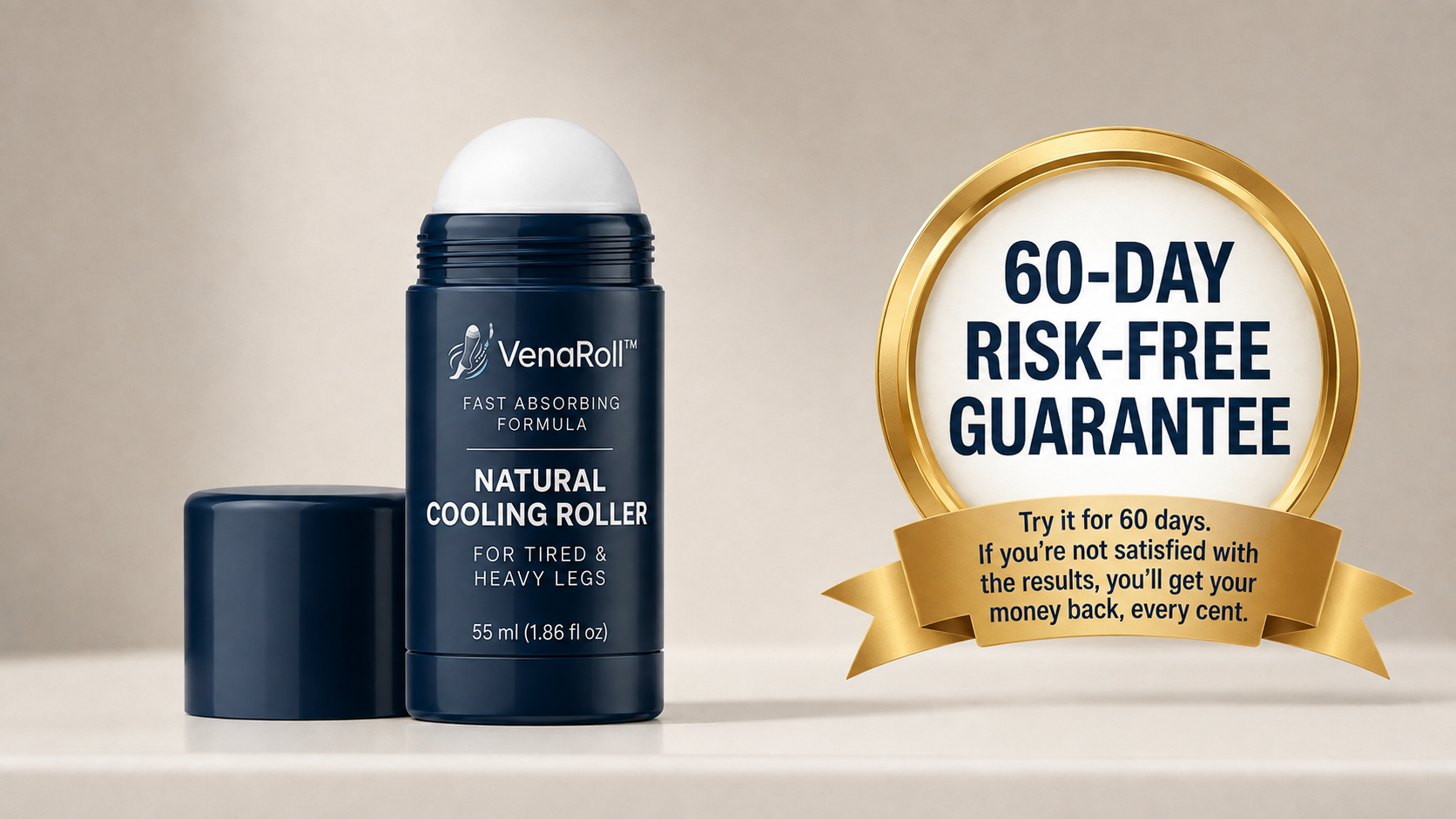
The VenaRoll™ 60-day guarantee: you are satisfied, or you get your money back
Look, I know how all this sounds.
You have probably been disappointed before. You may have spent money on so-called miracle cures that ultimately turned out to be nothing more than an expensive letdown.
That is exactly why the company is offering the following. And that is precisely why I have confidence in it.
Try VenaRoll™ for 60 days. That is two full months.
Long enough to use it under all kinds of difficult circumstances: during a long flight, at a wedding, in line at the supermarket on a hot thirty-degree afternoon, during the heaviest days of your period, or after a three-hour car ride.
Long enough so you won't have to think afterwards:
Maybe I didn't give it a fair chance.
Use it every morning.
Roll it on. Sixty seconds. And go on with your day.
If you don't wake up one morning, don't look at your ankles, and don't think:
Finally, these look like my own legs again.
Then you get every cent back.
No complicated forms.
No voucher for a next purchase.
And no nonsense like: “Send the empty bottle back first.”
You simply send an email to customer service in Boston, Massachusetts with the words:
It didn't work for me.
According to the company, your refund will then be processed within 48 hours.
I asked the founder why they offer a 60-day warranty, while many other brands only give thirty days.
His answer was:
Because we want to give every customer sufficient time to properly assess the product themselves. If they fail to do so within 60 days, we haven't earned their money.
That is the kind of company I attach my name to with peace of mind.
Only 1% of customers request a refund.
For me, that says enough.
You are now standing at an important turning point.

Right now, you are standing at a crossroads.
Route one: you continue as you are doing now.
You continue to struggle with your compression stockings every day.
You keep buying horse chestnut gel at the pharmacy, while you hardly notice any difference.
You keep cancelling vacations because you don't want to be the one wearing long pants on the beach.
And you remain a reliable source of income for an industry that profits every month from the fact that nothing changes with you.
Route two: you try something that focuses on the underlying problem.
You spend less than on a takeout meal.
You receive a roll-on that has already been used by 10,543 women.
You focus on what lies behind the complaints, instead of merely temporarily relieving the visible symptoms.
And tomorrow morning you will wake up with a little hope, instead of the same silent worry.
To be honest, the choice is obvious to me.
Because let's be honest.
Chronic venous insufficiency is a condition that can worsen over time.
If you do not change anything, there is a high chance that the symptoms will continue to worsen.
You can keep spending money on products that do not address the actual problem and eventually end up with hardened ankles, lipodermatosclerosis, or open wounds.
Or you make the practical decision to try VenaRoll™ and at least give yourself a fair chance to better support your legs.
Remember this: you run no financial risk.
Either it works as I described, or you get every cent back.
In both cases, you are better off than tonight if you do absolutely nothing.
This is how you proceed step by step.

Click on the button below with the text 'CHECK AVAILABILITY'.
Choose the package that suits you best. A little tip: take two bottles rather than one. That way you always have a spare and pay less per bottle.
Enter your delivery address. According to the company, orders received before 3:00 PM are shipped the same day.
Your package will be delivered within 3 to 5 business days. Shipping within Canda is free.
Apply the roll-on on the first morning after your order has arrived.
Send the team an email after three weeks and tell them what your partner said when they noticed the difference.
But whatever you do, do not close this page with the thought:
I'll order it later.
“Later” doesn’t help you when your legs still feel warm, heavy, and discolored on a Tuesday evening in November.
“Later” might mean another summer in long pants.
“Later” might mean another wedding where you choose clothing that completely covers your ankles.
The discount ends today at midnight.
Your legs have waited long enough. Click below and take the first step today.
With hopeful greetings,
Charlotte Davies
Registered nurse and former specialist vascular nurse from Massachusetts
PS Margaret sent me a photo this morning. She is standing in her garden in a knee-length summer dress, with her granddaughter in her arms. Her ankles are clearly visible.
In twelve weeks, you too might be able to look at your legs with more confidence. But you have to start today. The special discount the brand has made available to my readers ends at midnight. I no longer have the opportunity to extend the promotion.
PPS By now, I have referred more than 380 former patients to VenaRoll™. I receive no commission for this. I do not own shares in the company and am not on their payroll.
I simply could no longer bear to see how women were repeatedly sent from the doctor to a vascular clinic, or pharmacy without feeling that their real problem was understood.
The research exists. The laboratory exists. And the experiences of women like Margaret are real.
PPPS Just one more time, to be clear: the discount ends today at midnight.
Starting tomorrow, the normal selling price will apply to this page again. There will be no arrangement for people who missed the offer. I have already asked about this, and the answer was no.
So don't say that I didn't warn you.
Temporary discount today only!
⭐️⭐️⭐️⭐️⭐️ 4.9 out of 5 stars
10,543 verified reviews
This offer is available exclusively through this page. Not on Amazon, not on eBay, and nowhere else. We can only offer this discount because we sell directly to our customers. No middlemen. No extra markup.
Recommended:
★★★★★
4.9 | 10,543 Reviews
VenaRoll™
Finally, natural support for lighter legs and more daily comfort
Comments

Caroline Wilson
Can someone confirm if this really works?
Like · Reply
· 29
· 34 min

Rebecca Turner
Well... this little thing is really amazing! I had brown discoloration for two years that was spreading further and further around my right ankle. The burning sensation at night was almost driving me crazy. This little roll-on has made a huge difference for me. I really hope it helps you too!
Like · Reply
· 20
· 29 min

Sophie Mitchell
How long does shipping take?
Like · Reply
· 15
· 13 min
Melissa Becker
Hi Sophie, my package was delivered after about four business days.
Like · Reply
· 1
· 3 min

Ben Foster
If only I had bought this two years ago. This was exactly what I needed. The burning sensation around my ankle has finally subsided. After two weeks, my legs finally feel like my own legs again!
Like · Reply
· 2
· 5 min
Get up to 50% off today.

Copyright © 2014 – 2026 VenaRoll™. All rights reserved.